Early in 2020 I was asked by my live-in partner if I could make them a custom sweater. I’ve knitted sweaters before, but I’ve never designed one. At first I was a little hesitant, because designing sweaters means math. As much as I love math, math does not love me.
After a lot of thinking, a lot of research, and a lot of knitting, a sweater came from my hands. From one crafter to another, here’s some things I learned from designing my own sweater.
There’s Lots of Frogging in Your Future
Learning how to make and measure gauges will save you a lot of time, but all the predictive math in the world won’t save you from the frogging needed if you want the sweater to fit as best as you can. If I could make this sweater again, I would probably make more gauges than i did the first time around just to make sure that the pattern I developed could be scaled properly.
Don’t Let Your Client Choose the Yarn*
This is always an itchy subject to cover, especially with people that are commissioning their first custom knitted item. Many folks who work in the knitting cottage industry have guidelines in what items they make out of what materials for a very specific reason: Not all yarns are the same. For example, my partner wanted an off the shoulder sweater made out of an alpaca blend. I only agreed because my partner has incredibly sensitive skin and it also very picky about what kind of fabrics touch their skin.

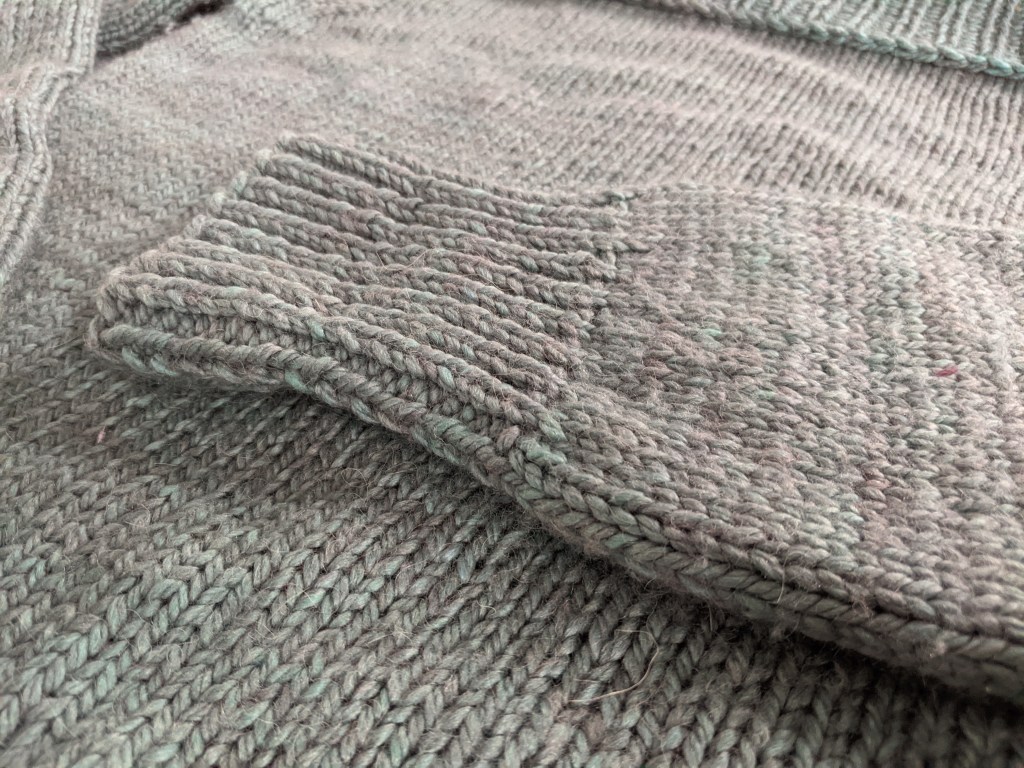
When I finished making the sweater, I realized that the arms are a lot heavier than I predicted, meaning that the neckline was going to be stretched out, even if I sewed in some twill tape into the neck and shoulders. That means not only re-knitting the neckline, but possible taking the sweater apart just to remake the arms. It can be incredibly frustrating, especially if you’re as much as a perfectionist as I am.
Of course, this advice does come with an asterisk, because sometimes you can’t dictate what a garment can be made from if your client has a specific fiber allergy or experiences a form of Misophonia. If you’re planning to take custom commissions, read up on as much material as you can on fiber alternatives and plan accordingly.
Document, Document, Document
I did take notes while knitting this sweater, but even now I’m still kicking myself that I didn’t write my pattern down as if I was going to publish it. What totally made sense to you while you’re in the middle of making an object doesn’t mean it will make sense to you six months down the road. Make sure you document everything as you work on it; your future self will thank you.
Be Ready to Get Our of Your Comfort Zone
One thing designers won’t talk about it that when you make a garment for the first time, you’re going to get out of your comfort zone real fast real quick. Be ready for it, because you’re not only learning new skills, you’re developing new connections between your brain and your muscles. The more often you do it, the easier it’s going to get. Also when you design your own work, you’re learning ways to make stuff better and faster.
Passion Will Only get You so Far
Designing and making custom pieces don’t rely on passion, they rely on dedication and discipline. The bigger part of participating within a cottage industry is that not everything you make will light a fire in your heart, or be the next “Mona Lisa” of your portfolio. Sometimes a hat is just a hat. Leave the passion for your personal projects, and sometimes the occasional “I have an idea and want to share it with the community” projects. The sooner you learn that not all of your work will “go viral” the better off you’ll be.
At the end of the day, I’m very glad I made this sweater. Do I see all of my mistakes in it? Yes. Can I make another, better, version of this sweater? Also yes. Will that stop me from making other custom pieces? Definitely not. Here’s to the next project, and the next design.
 The Naked Knitter